WHEEL LAB
Nexen Tire development, made reviewable
Follow the questions that connect materials, simulation, testing and sensor integration.
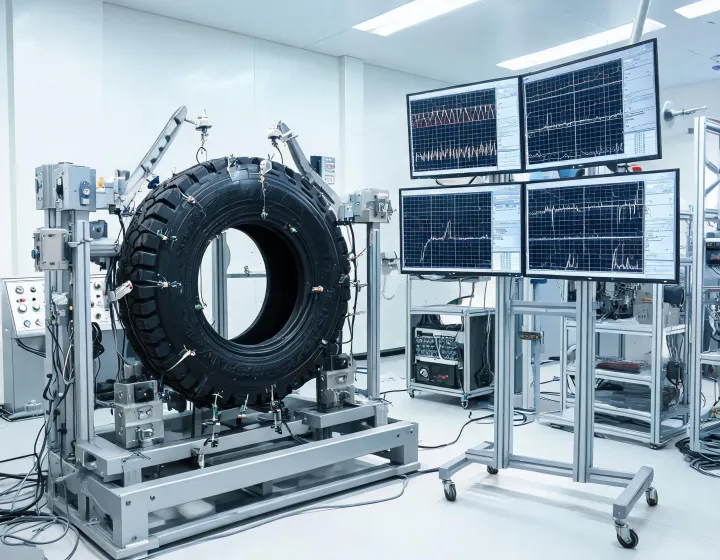
Development evidence map
A development program needs a clear link between its intended duty and the measurements used to assess it. The table below describes review areas, not claims of completed testing or performance.
| Stage | Question | Review input |
|---|---|---|
| Materials | Which compound properties matter? | Operating temperature and wear objectives |
| Simulation | Where are candidate designs sensitive? | Model assumptions, loads and boundaries |
| Rig testing | Does measured behavior match the brief? | Method, sample and acceptance limits |
| Sensor integration | Can condition data be collected usefully? | Interface, environment and data needs |
| Lightweighting | What changes alongside mass? | Strength, durability and operating constraints |
Simulation can narrow the questions for physical testing, but the model's boundaries must be stated. A test result applies to its specimen and conditions; it should not be generalized to another tire size or duty cycle without review.
Checklist before a claim
- Identify the product family, size and intended application.
- Record the method, sample conditions and acceptance criteria.
- Check whether the evidence applies in the destination market.
- Separate management-system certificates from product approvals.
- Discuss the trade-offs between rolling resistance, grip and service life.
For severe service, radial construction generally prioritizes rolling resistance and heat management, while bias construction may suit some low-speed duties where sidewall stiffness and damage resistance matter. Neither choice fits every route: confirm load, speed and surface conditions against the specific tire documentation. Lower rolling resistance can support efficiency, while a wet-grip or wear priority may require a different tread and compound balance; compare results under the same test conditions. For sensor-ready concepts, agree the information needed by the vehicle system and the environmental conditions at the interface. For lightweighting proposals, review the whole assembly and the relevant durability requirements before drawing conclusions about performance.